Wedding Flowers: A Watercolor Collection for Elegant Design
There’s a particular kind of elegance that only watercolor can achieve. It’s soft, organic, and full of subtle imperfections that feel deeply human and authentic. For designers and creators working on projects that call for romance, sophistication, and a touch of nature, this aesthetic is pure gold. That’s where a versatile floral illustration set comes in, offering a ready-made toolkit to infuse your work with that timeless, hand-painted charm. A collection centered around roses and hydrangeas is especially powerful, as these blooms are synonymous with celebration, love, and refined beauty, making them ideal for a spectrum of creative and commercial applications.
More Than Just Pretty Pictures: The Anatomy of a Useful Asset
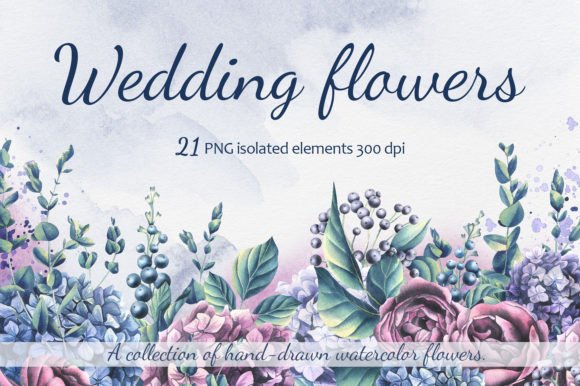
At first glance, you see beautiful flowers. But the true value of a well-curated design asset lies in its components and versatility. A set featuring 18 separate watercolor illustrations—including roses, hydrangeas, leaves, ornamental berries, eucalyptus branches, a bow, and even paper tags on laces—is a designer’s modular playground. Each element is a building block. The eucalyptus branches can frame a social media post, the berries can add a delicate accent to a logo, and the paper tags become perfect for product labeling or gift embellishments. Delivered as 21 high-resolution, 300 DPI PNG files with transparent backgrounds, these assets are built for both digital and print workflows. You can layer them, resize them, and combine them without worrying about clumsy white boxes or low-quality pixels. This technical foundation means your focus stays on creativity, not troubleshooting file formats.
From Digital Canvas to Physical World: Where to Use These Florals
The applications for such a collection extend far beyond a single wedding invitation. Think of it as a core visual resource for your brand or project library.
- Branding & Logo Design: For businesses in the wedding industry, wellness, beauty, or boutique retail, these florals can become a cornerstone of brand identity. A single, elegant rose can be integrated into a logo, while the full bouquet can adorn business cards, letterheads, and packaging. Using a consistent floral style across all touchpoints builds immediate recognition and communicates a specific aesthetic—whether that’s classic romance, bohemian charm, or modern garden style.
- Marketing & Social Media: Create a cohesive and visually stunning Instagram grid or Pinterest board. Use the leaves and branches to create subtle borders for quote graphics, or make the hydrangeas the star of a promotional sale announcement. For email marketing, a floral header image can dramatically increase open rates and engagement by setting a beautiful tone from the first glance.
- Print & Packaging: The tangible impact of these illustrations is immense. Design exquisite wedding stationery suites, from save-the-dates to thank-you cards. They are perfect for creating custom fabric prints for napkins or tote bags, adding elegance to ceramic product labels, or designing book covers and editorial layouts for magazines. A small business selling candles, soils, or baked goods can use these assets to create packaging that feels luxurious and bespoke.
- Digital Products & Web Design: Enhance your website’s hero section with a delicate floral arrangement, use the elements as dividers between blog sections, or create beautiful digital products like printable art, planners, or social media template kits for others to use.
Aligning Aesthetics with Strategy: Making It Work for Your Brand
Simply having beautiful assets isn’t enough; using them effectively requires strategic thought. The key is to ensure the floral style aligns with your project’s goals and audience. A watercolor rose has a very different personality than a geometric line-art flower. The former suggests softness, tradition, and romance, while the latter feels modern, clean, and minimal. Before diving in, ask yourself: What emotion should this project evoke? Who is it for?
For a bridal shop’s brand identity, you might use the full, lush bouquet as a primary visual. For a minimalist jewelry designer, perhaps only the delicate eucalyptus sprigs are used as subtle accents. This is where the versatility of a multi-element set shines—it allows you to dial the floral presence up or down to match your brand’s voice. Furthermore, consider how these graphics interact with your typography. A classic serif font pairs beautifully with watercolor florals for a timeless feel, while a clean sans-serif can create a modern contrast that keeps the design from feeling overly traditional. Always test font pairings and layout variations to find the balance that feels right.
Practical Considerations for Seamless Integration
When incorporating any new design asset into professional work, a few practical checks are essential. First, while the colors in a digital file are vibrant, always print a test proof if your project is for physical production. Screen colors can vary, and you want to ensure the soft pinks and greens translate perfectly to paper or fabric. Second, review the licensing. For a commercial font or asset, understanding the license is non-negotiable. You need to know if it covers the number of projects you have, whether it allows for merchandise creation, and if it requires attribution. A clear, permissive license for commercial use is what makes an asset truly valuable for entrepreneurs and small businesses.
Ultimately, a collection like this is about saving time and elevating quality. It provides a professional-grade starting point, allowing you to craft designs that look custom and polished without starting from a blank page. It’s a practical solution for busy creators who need to produce high-impact, emotionally resonant visual content consistently. By thoughtfully integrating these floral elements, you can build a stronger, more beautiful, and more recognizable presence for your brand or creative project.